
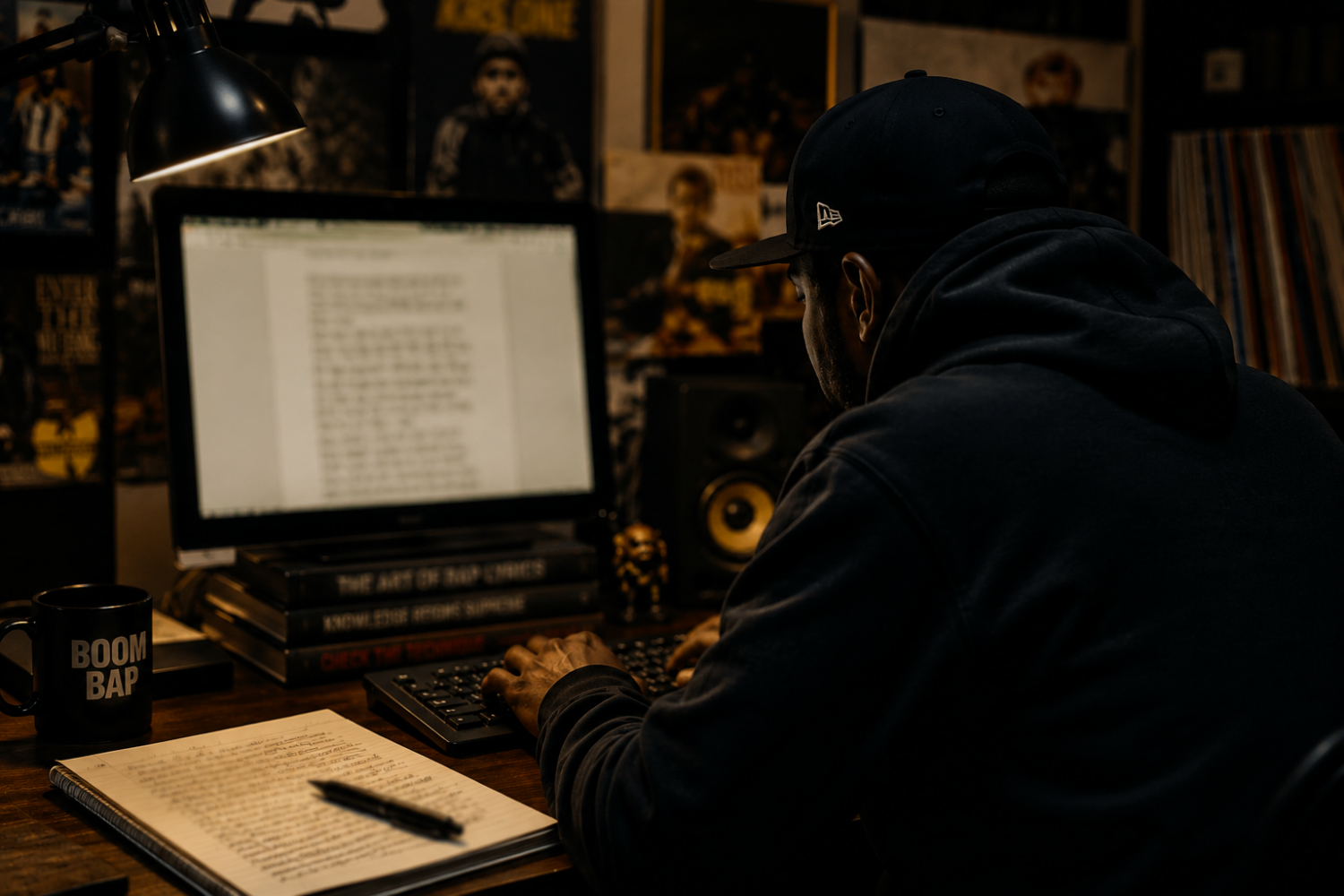
If Hip Hop journalism is dead, let’s stop pretending there was a lone gunman.
Everybody had a hand in it.
Labels. Publishers. Artists. Readers. Executives who prioritized traffic over truth. Writers who compromised. A broken business model that slowly rewarded visibility over credibility.
Everybody.
And because I’ve spent my career inside this world, I’m not speculating from the sidelines. I watched the shift happen in real time.
The problem was never simply that promotional opportunities existed. Marketing has always been part of the business. The real issue began when the line between promotion and journalism started to blur.
At some point, artists and their representatives began approaching journalists with budgets in hand, not for advertising, but for editorial coverage.
As in: What would it cost for you to interview my artist?
That should have ended the conversation immediately.
If I wrote about someone, it was because I believed they were worth covering. If I sat down for an interview, it was because I believed there was a meaningful story to tell. Not because someone had money to spend. That is not journalism. That is paid promotion wearing journalism’s clothing.
But if we’re going to be honest, we also have to acknowledge the conditions that made those compromises easier to justify.
By then, publications were already struggling. Traffic had become currency. Advertisers wanted volume. Readers clicked gossip, beef, scandals, chaos, and every messy headline they claimed to hate. Once clicks became the scoreboard, editorial priorities changed. Thoughtful analysis got pushed aside for whatever performed.
Writers who wanted to explore lyrical craftsmanship, cultural nuance, historical context, or serious commentary were increasingly told that audiences didn’t want that.
Meanwhile, publications willing to monetize visibility, sponsored opportunities, and blurred promotional lanes began pulling ahead. That created enormous pressure.
Once competing outlets started making money from those arrangements, publications trying to maintain clearer boundaries found themselves losing traffic, losing ad dollars, and losing ground.
Then came the scale game.
Independent publications were getting pitched on the idea that survival meant joining larger advertising ecosystems that promised reach, revenue, and competitive advantage.
On paper, it sounded like a lifeline. More visibility. More advertisers. More opportunity to compete.
But from where I sat, it became another trap. Because the focus shifted even further away from editorial identity and deeper into chasing volume. Traffic became the obsession. Scale became the selling point.
And once that happened, many outlets found themselves chasing numbers instead of protecting the very thing that made them valuable in the first place: trust, cultural fluency, and authentic connection to their audience.
For some, it wasn’t a rescue plan. It was the beginning of the unraveling. It became a hamster wheel, and very few people knew how to jump off.
And when a broken system puts financial pressure on everyone involved, ethical shortcuts become easier to rationalize. Some writers took the money. Not because they were villains, but because they had rent, car notes, and families. Real life.
While I understand that reality, those choices had consequences. Once some writers became willing to play ball, it made life harder for the ones who refused.
Because the response became simple: Well, someone else will do it if we don’t. That is how standards erode.
And once readers begin to suspect that editorial opinions can be bought, trust disappears. Without trust, journalism becomes noise.
Another casualty was expertise.
Hip Hop journalism is not simply reacting to a song or reposting a press release. It requires cultural fluency. History. Lineage. Regional understanding. Battle culture. Sampling knowledge. Political awareness. An understanding of why certain moments matter beyond whatever is trending that afternoon.
And while much of this played out most visibly through rap media, the damage extended to broader Hip Hop cultural journalism, too.
Without that foundation, coverage becomes shallow at best and irresponsible at worst.
And yes, readers played a role too. You cannot consistently reward nonsense with your attention, then ask why thoughtful journalism disappeared.
Artist behavior changed as a result. Once antics generated more engagement than artistry, some artists adapted accordingly. Suddenly, attention became easier to earn through spectacle than skill. And the art suffered for it.
Somewhere along the way, people also started confusing industry reporting with cultural journalism. Those are not the same thing. Industry coverage tracks deals, announcements, streaming numbers, signings, and rollouts. Cultural journalism asks deeper questions: Why does this matter? Who inspired this? What history is being ignored? Who got erased from the story? What does this moment actually say about the art form?
Let’s be honest. That kind of work has never been the most profitable lane. You are not financing your kid’s college with cultural writing. You do that work because you care.
Everything I have ever done in this space came from passion, not because there was some oversized financial reward attached.
Could I have made more money by compromising? Absolutely. Probably much faster.
But I also believe my credibility would have disappeared just as quickly. And many of the people who chose shortcuts are no longer doing this work. That tells its own story.
In the end, we all lost. Artists lost trusted advocates. Readers lost credible voices. Publications lost authority. Writers lost sustainable careers, and the art lost context.
So why am I still here? Because this was never transactional for me.
As a little girl, I already knew this world fascinated me. I wanted the stories behind the music. I wanted to ask the questions. I wanted to understand the people shaping the soundtrack of my life.
Now I exist in a rare and beautiful space. I get to sit with the artists who helped shape me, then turn around and speak with the next generation while they build their own legacies
That is a privilege.
And I’m not interested in walking away from it.
Hip Hop journalism does not need a funeral.
It needs integrity.
Add comment