
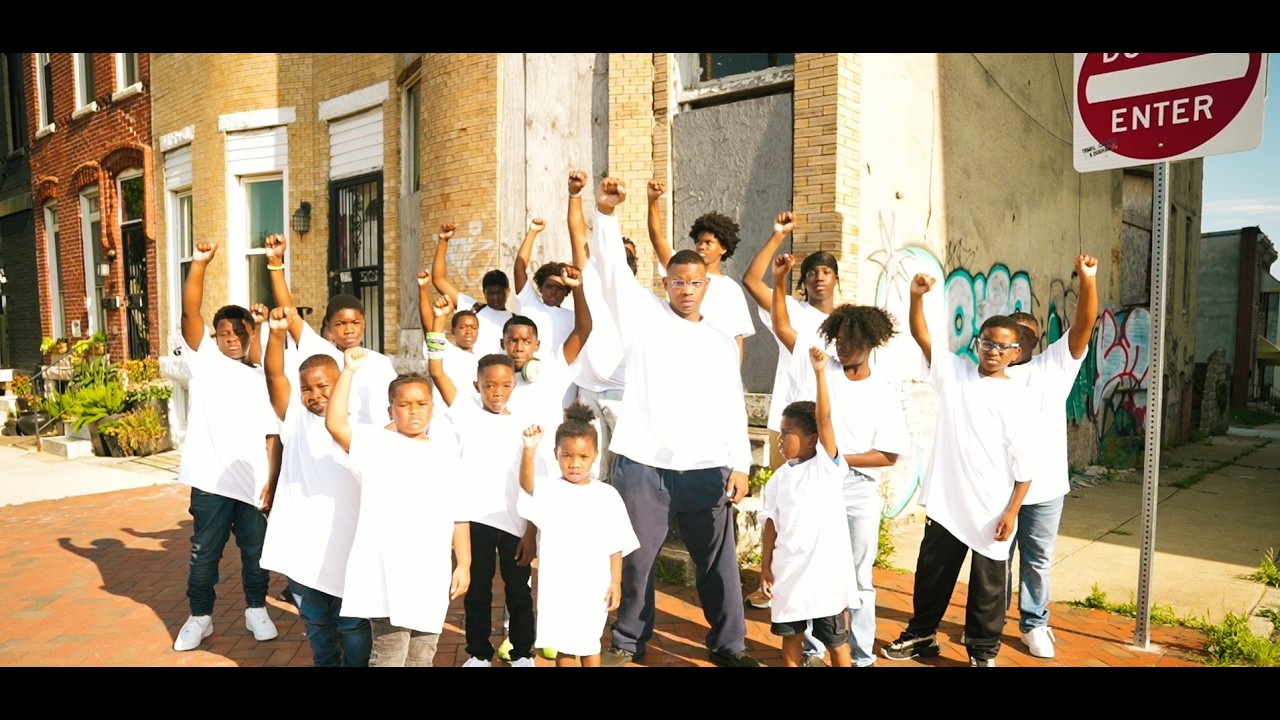
The song delivers a forceful message about mental freedom, education, power, and community-building. It challenges listeners, especially Black youth, to look beyond entertainment and examine who controls society’s most important institutions.
At the beginning, the artist asks who controls the banks, laws, schools, and curriculum. These institutions influence money, opportunity, public policy, and what future generations are taught. The line about being permitted to “control a ball” suggests that society may celebrate Black people as athletes and entertainers while limiting their access to positions that control wealth, knowledge, institutions, and resources.
The song is not attacking sports or music. It criticizes a culture that gives entertainment more attention than literacy, mathematics, science, economics, history, and political understanding. The artist warns that it is dangerous when children know everything about celebrities but cannot read well, solve problems, understand their history, or recognize how power operates.
Critical thinking is another major theme. Listeners are encouraged to question propaganda, political promises, historical narratives, doctrines, religious images, and other information they receive. Simply seeing or hearing something does not mean a person understands it. People can consume information every day while remaining unaware of manipulation, bias, or hidden agendas.
The song also separates knowledge from wisdom. Knowledge is having information, while wisdom is knowing how to use that information responsibly and effectively. Education should create competent people who can solve problems, build organizations, create wealth, defend their interests, strengthen their communities, and prepare for the future. It should not merely teach people to memorize and repeat facts.
When the artist mentions civil rights laws, the message is that legal rights are important but do not automatically create complete liberation. A community may possess rights on paper while still lacking ownership, economic independence, quality schools, political influence, strong institutions, or control over its public image. Freedom may provide permission to participate, but liberation requires the power and capacity to direct one’s own future.
The statement about preparing for war in order to maintain peace refers to strength and strategic deterrence. People are less likely to be exploited when they are educated, organized, disciplined, economically secure, and capable of protecting their interests. Preparation does not refer only to weapons. It includes intellectual strength, financial power, unity, strategic planning, technological ability, and durable institutions.
Music is presented as a tool for education. The artist explains that serious information was placed inside a song because many people are more likely to listen to music than read books. Music therefore becomes a vehicle for carrying important ideas. The song is meant not only to entertain, but also to make listeners think, study, question, organize, and act.
Near the end, the message becomes increasingly constructive. The artist calls for Black-owned schools, banks, businesses, think tanks, and other institutions. The community needs researchers, educators, skilled workers, scientists, engineers, entrepreneurs, financial experts, and disciplined leaders. Instead of only criticizing existing systems, people must develop institutions that can create opportunities, shape ideas, train future generations, and protect community interests.
The statement that “competence is the game” represents the central lesson of the song. Progress requires more than pride, slogans, speeches, protests, or positive thinking. It requires excellence in mathematics, science, finance, engineering, education, business, leadership, strategy, and organization. Those abilities must then be placed into action for the benefit of the community.
Overall, the song warns listeners not to allow entertainment, propaganda, symbolic victories, or empty promises to replace serious thought. Its message is to educate yourself, question what you are taught, master valuable skills, transform knowledge into wisdom, build strong institutions, and use organized power to shape the future. The ultimate goal is not simply to survive or participate in society, but to gain the knowledge, competence, unity, and independence necessary to determine the direction of one’s community.
Add comment